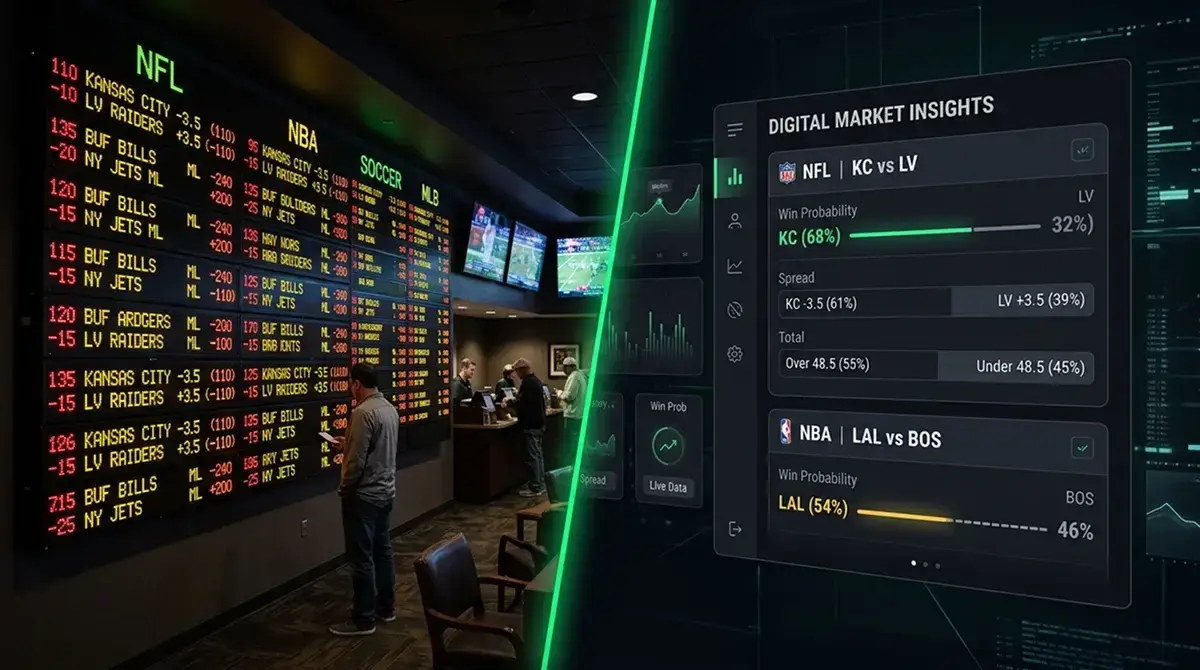

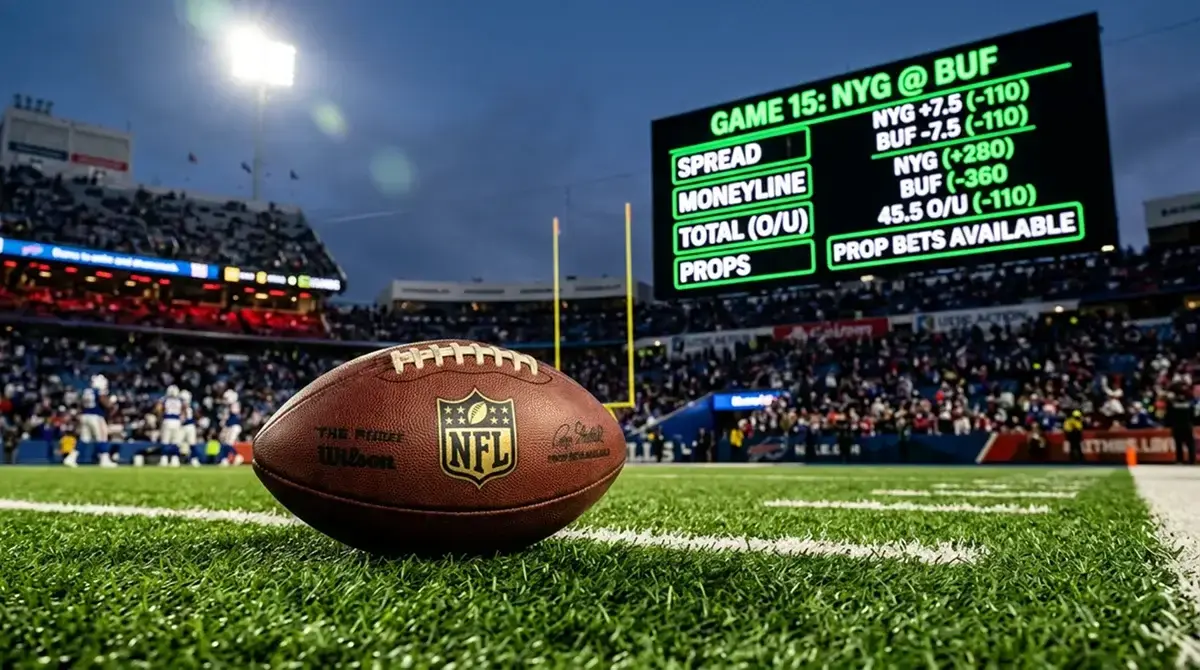
More than 76 million Americans placed bets on NFL games during the 2024-2025 season, according to the American Gaming Association. The majority of those bets went beyond simple “who wins” wagers. They bet on point spreads, player props, parlays and same-game combinations that turned individual games into multi-layered puzzles. UK bettors accessing NFL markets through crypto sportsbooks have access to all of these bet types, often with a wider selection of markets than domestic bookmakers offer on American football.
Over nine years of NFL crypto betting, I have placed every type of wager listed in this article – some profitably, some expensively. Each bet type carries a different risk profile, a different house edge, and a different strategic application. What follows is not a menu to sample at random. It is a practical breakdown of when each bet type makes sense, what it costs you in margin, and where crypto sportsbooks differ from traditional UK bookmakers in how they handle NFL markets. As Bill Miller, president of the American Gaming Association, has noted, legal sports betting enhances the fun and competition that make NFL traditions special, but only if you understand what you are betting on.
Crypto Moneyline and NFL Point Spread Betting Odds
I still remember a conversation with a UK friend who had just started betting on the NFL. “Why would I bet the spread when I can just pick the winner?” he asked. Two months later, after losing bet after bet on heavy favourites at short moneyline prices, he understood. The moneyline and the point spread are the two foundational NFL bet types, and choosing between them is a strategic decision, not a preference.
A moneyline bet is a straight wager on which team wins the game. No margin of victory matters. Just the result. If you back the Buffalo Bills moneyline at 1.45 (decimal) and they win by one point or fifty, you collect the same payout. The catch is the price. In a typical NFL matchup between a strong favourite and a moderate underdog, the favourite’s moneyline might sit at 1.30 to 1.50, meaning you risk a lot to win a little. The underdog’s moneyline (say, 2.80 to 3.50) offers a bigger payout but requires the team to win outright. Moneyline bets make the most sense in close games where the odds are near even, or when you have a strong conviction on an underdog. Backing a -300 favourite (decimal 1.33) on the moneyline is a losing strategy over any meaningful sample because the margin for error is razor-thin, and a single upset wipes out weeks of profits.
Point spread betting levels the playing field. The sportsbook assigns a handicap to the favourite (say, Kansas City -3.5), meaning the Chiefs need to win by four or more points for a spread bet to cash. The underdog gets the opposite: Cincinnati +3.5, meaning the Bengals can lose by up to three points and still “cover” the spread. Because the spread brings both sides of the market closer to a 50/50 proposition, the odds on each side are typically near even, around 1.91 in decimal (or -110 in American), with the small difference from 2.00 representing the sportsbook’s margin.
Spreads are the primary NFL betting market for a reason. They force you to assess not just who wins, but by how much. That extra layer of analysis (considering schedule spots, injury impact on margin of victory, weather effects on scoring) is where genuine edge lives. On crypto sportsbooks, NFL spreads are typically priced off the same opening lines as regulated US platforms, but with the margin differences I have discussed. If a crypto sportsbook offers spreads at -108/-108 instead of the standard -110/-110, that seemingly tiny difference saves you real money over a full season of betting.
When should you choose one over the other? I use moneyline bets primarily for underdog plays and teaser components. For everything else, and especially for the 10 to 14 bets per week that form the core of my NFL portfolio – spreads are the default. The tighter margins, the more balanced risk/reward profile, and the richer analytical framework make spreads the superior market for consistent, disciplined NFL betting.
One practical note for UK bettors on crypto sportsbooks: always check whether the platform offers alternative spreads. An alternative spread lets you adjust the handicap in exchange for different odds. If the standard line is Chiefs -3.5 at 1.91, you might find Chiefs -2.5 at 1.75 or Chiefs -6.5 at 2.40. These alternative lines give you flexibility to calibrate your risk/reward based on your conviction level. Not all crypto sportsbooks offer them for every NFL game, but the ones that do provide a significantly richer betting experience than those limited to the standard line.
Totals, Player Props and Team Props
Totals betting (the over/under) is the NFL’s quietest goldmine. While spreads and moneylines grab the attention, totals markets attract less public scrutiny, which means they are often softer on crypto sportsbooks. The concept is simple: the sportsbook sets a number for the combined points scored by both teams, and you bet whether the actual total will be over or under that number. A game with a total of 47.5 means you are deciding whether you expect 48 or more combined points (over) or 47 or fewer (under).
NFL totals are influenced by a constellation of factors: offensive efficiency, defensive rankings, weather, pace of play, indoor versus outdoor stadiums, and rest advantages. I find totals particularly appealing for crypto sportsbook bettors because the lines tend to lag behind injury news that affects scoring projections. If a starting quarterback is ruled out on Friday afternoon, the spread adjusts quickly but the total sometimes does not move for hours on smaller crypto platforms. That lag is a window.
Player props take individual performance as the subject of the bet. Passing yards, rushing yards, receiving yards, touchdowns scored, completions, interceptions. Any quantifiable individual statistic can become a prop market. A typical player prop looks like this: “Patrick Mahomes over/under 275.5 passing yards.” You assess whether Mahomes is likely to exceed or fall short of that line and bet accordingly.
NFL generates more wagering volume in a single Sunday time slot than entire weeks of MLB or NBA action, per RG.org data, and a significant portion of that volume flows into prop markets. Crypto sportsbooks vary enormously in prop coverage. Some offer 50 to 100 player props per NFL game, comparable to the best regulated platforms. Others offer 10 or fewer, limited to quarterback passing yards and maybe a rushing line. If props are central to your betting approach (and they should be, given the analytical edge available), prop market depth is a critical factor in platform selection.
Team props (total team rushing yards, total team sacks, first team to score) sit between game-level totals and individual player props. They tend to carry wider margins than player props on most crypto sportsbooks, making them less attractive from a pure value standpoint. I use team props selectively, typically when I have a specific matchup thesis (for instance, a dominant defensive line facing a weak offensive line, making the “team sacks over” appealing) rather than as a default market.
One critical difference between crypto sportsbooks and traditional UK bookmakers on props: settlement rules. Some crypto platforms settle props only on regular-time statistics, excluding overtime. Others include overtime in the settlement. If a game goes to overtime and a quarterback throws 30 additional yards, the difference between these rules can flip the outcome of your bet. Check the platform’s settlement rules for props before placing your wager – this information is typically buried in the terms and conditions or FAQ section, not displayed on the bet slip itself.
NFL Futures and Outright Markets on Crypto Platforms
Futures bets are season-long commitments, and when you are paying in cryptocurrency, the time dimension adds a variable that does not exist in fiat betting. A Super Bowl winner bet placed in July does not settle until February. A lot can happen to Bitcoin’s price in seven months.
The core futures markets on crypto sportsbooks mirror what you would find on any regulated platform: Super Bowl winner, AFC and NFC conference champions, division winners, regular-season win totals, and individual awards like MVP and Offensive Player of the Year. These markets open as early as the day after the previous Super Bowl and remain active through the playoffs, with odds adjusting constantly as the season unfolds. Super Bowl LX alone generated £1.4 billion in legal wagers, per AGA estimates, which gives you a sense of how much money concentrates around a single futures settlement date.
From a pure betting standpoint, futures offer a different value proposition than game-by-game wagers. The margins are wider – typically 15% to 30% overround on a Super Bowl winner market with 32 teams – but the potential payouts are much larger. More importantly, futures give you a structural advantage if you do your homework before the public market catches up. A team that makes a significant off-season acquisition might be underpriced in the futures market for weeks before the adjustment reaches crypto platforms. Pre-season and early-season are the windows where I find the most value in futures.
The crypto-specific wrinkle is volatility. If you place a 0.01 BTC futures bet in July and Bitcoin drops 30% by February, your winning payout – denominated in BTC – is worth substantially less in pound terms than when you placed the bet. This is not a sportsbook problem; it is a currency risk that compounds over the long settlement horizon of futures. I handle this by using stablecoins for any futures bet with a settlement date more than two months out. The elimination of currency risk makes the expected-value calculation much cleaner.
Cash-out options on futures deserve a mention. Some crypto sportsbooks allow you to settle a futures bet early at a reduced payout if your selection is performing well mid-season. A Super Bowl futures bet on a team that starts 10-2, for instance, might be worth cashing out at a guaranteed profit rather than riding the remaining uncertainty of the playoffs. Not all platforms offer cash-out on futures, and those that do typically build an additional margin into the early-settlement price. Still, the optionality has value – especially when combined with the volatility factor of crypto-denominated bets.
Parlays and Same-Game Parlays with Cryptocurrency
Parlays are the sportsbook’s best friend and the bettor’s most seductive trap. I say that as someone who has placed hundreds of parlays over the years, some winning spectacularly, most losing inevitably. Understanding why requires looking at the maths that most guides gloss over.
A parlay combines two or more selections into a single bet. All selections must win for the bet to pay out. The potential payout is calculated by multiplying the odds of each selection together, creating a compounding effect that produces eye-catching returns from modest stakes. A three-leg parlay at odds of 1.91 per leg pays roughly 6.97, turning a 10 GBP bet into nearly 70 GBP. The allure is obvious.
The problem is equally obvious when you do the maths. Each leg of a parlay carries the sportsbook’s margin, and those margins compound. A single spread bet at -110 (1.91) carries roughly a 4.5% margin. A three-leg parlay carries an effective margin of approximately 13%. A five-leg parlay pushes past 20%. You are paying an increasingly steep tax to the house with every leg you add. This is not speculation. It is arithmetic, and the sportsbook’s profit margin on parlays is significantly higher than on single bets.
Same-game parlays take this further by combining multiple selections from a single game. You might parlay the Chiefs moneyline with Patrick Mahomes over 275.5 passing yards and Travis Kelce over 65.5 receiving yards. The problem with SGPs is correlation. If the Chiefs are winning (covering your moneyline leg), Mahomes is probably throwing well (helping your passing yards leg), and Kelce is likely involved (supporting your receiving yards leg). These outcomes are positively correlated, meaning they should not be priced independently, but sportsbooks often price them as if they were, then adjust with a “correlation factor” that favours the house.
On crypto sportsbooks, parlay and SGP markets are often promoted aggressively through boosted-odds offers and “parlay of the day” features. The boosts look generous but rarely compensate for the underlying margin. My approach to parlays is disciplined restraint: no more than two or three legs, no “lottery ticket” five-or-six-leg combinations, and a strict bankroll cap of 5% of weekly betting volume. Parlays should be seasoning, not the main course.
If you do bet parlays, consider the correlation between your legs carefully. A parlay combining the Bills moneyline with Josh Allen over 250.5 passing yards has strong positive correlation – if the Bills win, Allen probably played well. The sportsbook knows this and adjusts the parlay price downward accordingly. A parlay combining an unrelated game spread (say, Raiders +7.5) with a player prop from a different game (Derrick Henry over 85.5 rushing yards) has zero correlation, which means the parlay price reflects the independent multiplication of odds without a correlation penalty. Uncorrelated multi-game parlays, when used sparingly and with legs you have independently analysed, are the most defensible form of parlay betting.
Live NFL Betting with Crypto: Speed and Limitations
There is a particular kind of adrenaline that comes with placing a live NFL bet and watching it settle within minutes. Live betting – also called in-play betting – lets you wager on outcomes while the game is in progress. The odds update continuously based on the score, game situation, time remaining and momentum shifts. It is the fastest-growing segment of sports betting, accounting for 62.35% of online sports betting revenue globally in 2025, per Precedence Research data.
On crypto sportsbooks, live NFL betting works much like it does on traditional platforms, with one significant difference: latency. When you click “place bet” on a live market, the sportsbook checks whether the odds have changed since you loaded the page. On regulated platforms with sophisticated infrastructure, this confirmation happens in milliseconds. On some crypto sportsbooks, the delay can stretch to several seconds – an eternity when a quarterback is mid-throw and the live line is about to shift. Some platforms handle this with an “accept any odds change” toggle, which speeds up bet placement but means you might get a worse price than the one displayed.
The blockchain itself introduces no meaningful delay to live betting. Your bet is placed on the sportsbook’s internal system, not on-chain. The blockchain is only involved in deposits and withdrawals. But the sportsbook’s own odds engine – the software that calculates and updates live prices – varies dramatically in quality between platforms. A crypto sportsbook with a sophisticated, low-latency odds engine offers a genuinely competitive live betting experience. One with a sluggish engine creates frustrating delays and frequent bet rejections, especially during high-action moments like red-zone drives and two-minute drills.
For UK bettors, live NFL betting has a practical timing consideration. Most NFL games kick off between 6pm and 2am GMT on Sundays. The late-afternoon US window (around 9:25pm GMT) and Sunday Night Football (1:20am Monday GMT) are the prime live betting windows for UK-based bettors who are still awake and alert. Betting live at 1am after a long Sunday carries its own risk – fatigue degrades decision-making, and the temptation to chase losses from the earlier slate is strong. I set a hard rule: no live bets after midnight unless I have specifically planned for a late-game strategy before the day started.
The live betting markets available on crypto sportsbooks typically include updated moneylines, spreads and totals that adjust after every scoring play or significant possession change. Some platforms also offer live player props – updated passing yard lines, rushing totals and touchdown scorer markets that adjust as the game progresses. These live props are where I find the most value in in-play betting, because they are often priced with wider margins than live game lines and adjust more slowly to the evolving game script. If a running back breaks a 40-yard rush in the first quarter, his live rushing yards over/under might not adjust for several minutes on a slower crypto platform – a window that experienced NFL bettors can exploit.