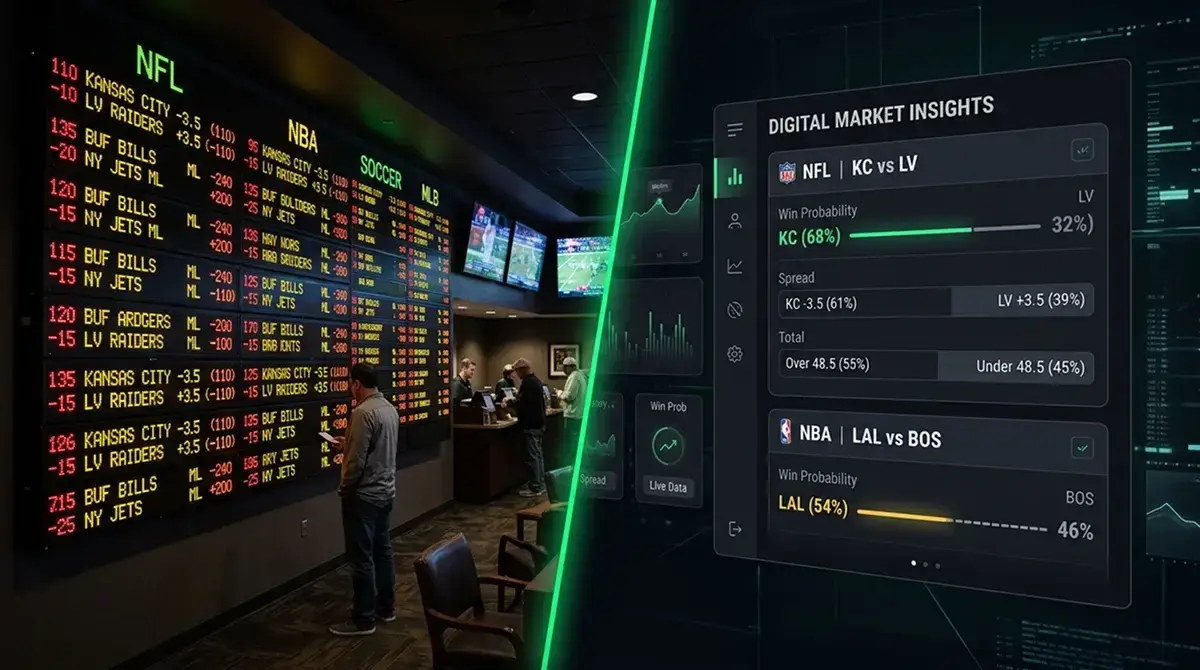


The NFL season is not a single market. It is a series of distinct phases, each with its own betting dynamics, liquidity profile, and strategic considerations for crypto bettors. Bettors who treat Week 3 the same as the Divisional Round are leaving value on the table, and crypto sportsbooks amplify both the opportunities and the pitfalls of each phase in ways that differ meaningfully from traditional UK-licensed platforms.
Americans wagered approximately £24 billion on NFL games during the 2025 season through legal US sportsbooks, per American Gaming Association data, an 8.5% increase year-on-year from £22 billion the previous season. But that aggregate figure masks enormous and consequential variation between the regular season’s long 18-week marathon and the playoffs’ high-intensity, high-stakes sprint. Understanding how betting volume, odds accuracy, liquidity depth, and market behaviour shift across these phases is essential context for any UK crypto bettor looking to sustain profitability and manage risk over a full campaign.
NFL Regular Season Betting: Volume and Value Market Windows
The NFL regular season spans a full 18 weeks, with each team playing 17 games across an 18-week schedule with one bye week. For crypto bettors, this is the foundation, the phase where the largest total volume flows and where the most exploitable inefficiencies exist for disciplined and well-prepared bettors.
Early-season games (Weeks 1-4) offer particular opportunities because the market is still calibrating. Roster changes, coaching adjustments, and scheme installations create uncertainty that oddsmakers must price with incomplete information. Lines during September are demonstrably looser than lines during November. For UK bettors on crypto platforms with thinner trading teams, this effect is amplified. A Week 2 spread on a platform with a small oddsmaking operation may lag the sharp US books by a full point or more.
Mid-season (Weeks 5-12) is the most efficient phase of the market. By this point, sample sizes are meaningful, injury patterns have emerged, and the sharps have calibrated their models. Finding value on mainstream spreads and totals becomes harder. This is when prop markets and alternative lines earn their keep – the main lines are sharp, but the secondary markets (player props, team totals, quarter-by-quarter lines) often retain soft spots.
Late-season games (Weeks 13-18) introduce new variables: weather, playoff implications, and rest strategies. Teams that have clinched a playoff spot may rest starters in Week 18. Teams with nothing to play for may exhibit effort that is hard to quantify. Weather in northern stadiums shifts from an occasional factor to a regular one. These variables create volatility in outcomes that the market handles imperfectly, and the resulting value windows are among the season’s most reliable.
Playoff Betting: How Handle and Margins Shift
Playoff betting is a fundamentally different animal. The number of games drops from 16 per week to six (Wild Card), then four (Divisional), two (Championship), and one (Super Bowl). Volume per game skyrockets. Super Bowl LX drew an estimated £1.4 billion in legal US wagers alone, according to AGA figures – more than many individual regular-season weeks across all games combined.
In Q4 2025, DraftKings recorded £13.3 billion in NFL betting handle (13% year-on-year increase) with sports betting revenue of £1 billion, up 63% year-on-year, per DraftKings and Covers data. The playoff period drove a disproportionate share of that revenue growth, as both volume and recreational bettor participation spike during the postseason.
For crypto sportsbooks, the playoff surge has specific consequences. Liquidity deepens as recreational bettors flood in, but odds margins often tighten because the major operators – whose lines the crypto books reference – price playoff games with maximum precision. The soft lines available during September are largely absent during January. Crypto platforms that shade their prices off the consensus US line have less room to do so when the consensus is tight and heavily traded.
The shift in bettor composition matters too. During the regular season, a crypto sportsbook’s NFL market may be populated primarily by engaged, informed bettors. During the playoffs, casual bettors arrive in waves – people who bet once or twice a year, typically on the Super Bowl or their team’s playoff appearance. This influx of “public money” can create temporary line distortions, particularly on popular teams. If the public hammers the Chiefs moneyline on a crypto platform with limited liquidity, the line may move further than it would on a well-capitalised US book, creating value on the other side.
Scheduling Your Bets: UK Time Zones Across the NFL Calendar
The UK time zone adds a practical dimension that shapes strategy differently across the season.
Regular-season games typically kick off at 6 PM, 9:05 PM, and 1:20 AM UK time on Sundays, with Monday Night Football starting at 1:15 AM and Thursday Night Football at 1:20 AM. For UK bettors, the early window is the most accessible – you can watch, bet live, and make halftime adjustments without sacrificing sleep. The late-night games require either commitment or pre-game bets placed before bed.
Playoff games follow a significantly compressed schedule with fewer games carrying far greater weight. Wild Card weekend features games across Saturday and Sunday, with Saturday kickoffs at 9:30 PM and 1:15 AM UK time. The Divisional Round follows a similar pattern. Championship Sunday narrows the field to just two games, typically at 8 PM and 11:30 PM UK time. The Super Bowl kicks off around 11:30 PM UK time, with most UK viewers staying up past 3 AM for the conclusion.
Over 6 million people watched the London NFL matches via television or online streams in 2025, according to London Loves Business and Front Office Sports, and UK NFL television audiences have roughly doubled over the past decade. That growing audience increasingly includes bettors, and the timezone challenge is the most cited barrier to deeper engagement with NFL betting among UK fans I speak with.
For crypto bettors specifically, the timing interacts with deposit and withdrawal logistics. If you need to move Bitcoin onto a sportsbook for a late-night live bet, network confirmation times become critical (20-minute wait during a volatile fourth quarter is not the same as a 20-minute wait on a Tuesday afternoon. Pre-loading your sportsbook account before the weekend is the simplest solution, though it requires trusting the platform with your funds for an extended period. Stablecoins on fast networks like Tron can reduce the urgency, settling in seconds rather than minutes.
Planning your bankroll cadence around the season’s rhythm keeps your capital efficient and well-deployed while keeping your late-night decisions focused on the football rather than the blockchain. During the regular season, a weekly loading pattern works well: deposit your budget on Friday, bet across the weekend, and withdraw any remaining balance on Monday. During the playoffs, when individual game stakes tend to be higher and the emotional intensity increases, a more cautious approach is warranted. Deposit only what you have pre-committed to wagering on each specific game, and resist the temptation to reload mid-evening after a loss. The compressed playoff schedule already reduces your total number of betting opportunities, which makes discipline on each individual game proportionally more important than during the regular season.