

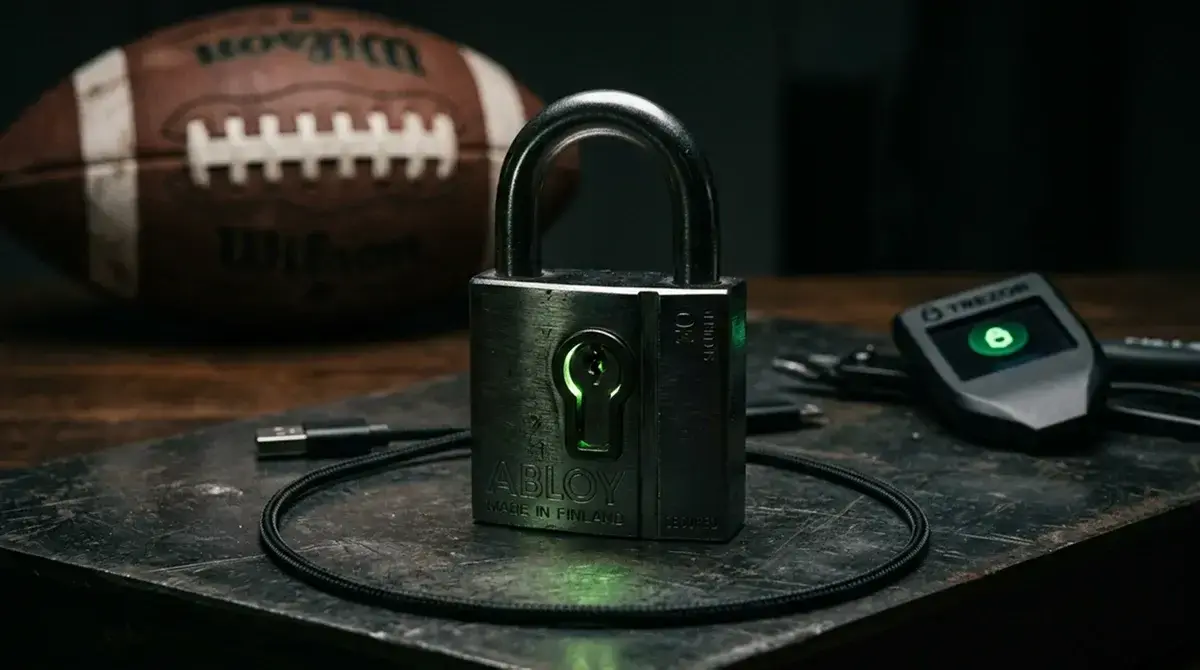
Losing a bet is part of the game. Losing your entire bankroll to a phishing link is something else entirely. The crypto betting space operates with fewer safety nets than the regulated UK market, and the security burden shifts squarely onto the bettor. If that sounds like a warning, it is, but it is also an invitation to take control of the one variable in this space that you can actually manage.
The UK Gambling Commission has conducted hundreds of enforcement actions against unlicensed operators, including cease-and-desist notices, mass URL removals via search engines, and site blocking orders, per the Commission’s CEO Briefing. Criminal investigations related to illegal gambling surged dramatically year-on-year, as the UKGC reported at the IAGR 2025 conference. That enforcement activity targets the most visible offenders, but it barely scratches the surface of the offshore crypto gambling ecosystem. In this environment, your personal security practices are not optional – they are your primary defence.
Phishing Risks, Rug Pulls, and Fraudulent Sportsbook Detection
Phishing is the most common attack vector, and it works because it exploits habit rather than technology. You receive an email that looks like it comes from your crypto sportsbook: the logo is right, the formatting is right, the URL is almost right. It asks you to verify your account by logging in. You click, enter your credentials, and hand them to an attacker who drains your balance within minutes.
The crypto variant of phishing is particularly dangerous because transactions are irreversible. On a UK-licensed bookmaker, a fraudulent withdrawal triggers a chargeback process through your bank. On a crypto sportsbook, once the Bitcoin leaves the platform, it is gone. No bank, no chargeback, no reversal. The finality that makes crypto fast also makes it final.
Fake sportsbooks represent a step beyond phishing. These are entire platforms built to mimic legitimate operations – real-looking interfaces, functional deposit pages, even working bet slips. The scam reveals itself at withdrawal time, when your request is denied, delayed, or met with escalating KYC demands designed to stall until you give up. Some fake sportsbooks operate for months, building a veneer of legitimacy through affiliate marketing and social media presence before disappearing with deposited funds.
Rug pulls follow a similar pattern but target decentralised betting protocols. A developer launches a DeFi betting dApp, attracts liquidity from bettors, and then exploits a backdoor in the smart contract to drain the pool. The code may even pass a superficial audit. The risk is concentrated in newer, unproven protocols – established DeFi platforms with years of operation and significant locked value are far less likely to rug, though the risk never reaches zero.
Wallet Security: 2FA, Seed Phrases and Cold Storage
Your crypto wallet is the vault. Everything else (the sportsbook, the exchange, the browser) is a door that leads to it. Securing the vault matters more than securing any individual door.
Two-factor authentication should be enabled on every account that touches your crypto: your exchange, your sportsbook account, and your email. Use an authenticator app rather than SMS-based 2FA. SMS is vulnerable to SIM-swap attacks, where an attacker convinces your mobile provider to transfer your number to their device, intercepting the verification codes. Authenticator apps generate codes locally on your device and are immune to SIM swaps.
Your seed phrase (the 12- or 24-word recovery phrase generated when you create a non-custodial wallet) is the master key to your funds. Anyone with your seed phrase can reconstruct your wallet on any device and transfer everything in it. Write it on paper or stamp it in metal. Do not store it digitally, not in a notes app, not in a screenshot, not in cloud storage. A compromised cloud account means a compromised wallet, and cloud accounts are hacked more often than most people realise.
Cold storage (hardware wallet that stores your private keys on a device that never connects to the internet) is the highest level of security available to individual users. For a UK bettor with a meaningful NFL crypto bankroll, keeping the bulk of funds on a hardware wallet and transferring only a week’s betting budget to a hot (internet-connected) wallet is the standard recommendation. The identity verification you complete on a platform does not protect your wallet; only you can do that.
How to Verify a Crypto Sportsbook’s Security Credentials
Before depositing on any platform, run a basic due-diligence check. None of these steps guarantee safety, but they filter out the most obvious risks.
Check the domain age. A sportsbook that launched last month is inherently riskier than one operating continuously for five years. Domain registration lookups are free and take seconds. If the domain was registered three weeks ago and the platform claims to have been operating since 2020, that is a red flag.
Look for a verifiable licence. A Curaçao licence is the baseline for most crypto sportsbooks. It is not equivalent to UKGC regulation, but it indicates the operator has at least submitted to a minimal regulatory framework. The licence number should be displayed on the site and verifiable through the issuing authority’s public registry. If the site claims a licence but the number does not check out, walk away.
Examine the smart contract audits carefully, if applicable to the platform you are evaluating. DeFi betting protocols should have their smart contracts audited by a recognised security firm. The audit report should be publicly available, comprehensive, and recent. An audit from three years ago on a contract that has since been updated provides limited assurance. No published audit at all on a protocol handling real money is a disqualifying risk.
Search for community feedback beyond the platform’s own testimonials. Independent forums, social media discussions, and review aggregators paint a more honest picture than curated reviews on the sportsbook’s website. Pay particular attention to withdrawal complaints: a pattern of delayed or denied withdrawals is the most reliable early warning of a problematic operator. Look for complaints that describe similar experiences from multiple users, rather than isolated incidents that could reflect individual misunderstandings of platform rules.
Finally, test with a small deposit. Place a minimum bet, win or lose, and attempt a withdrawal. If the withdrawal processes smoothly and arrives in your wallet within the stated timeframe, the platform has passed a basic but essential operational test. If it does not, you have discovered the problem at minimal cost. This test should be completed well before you ever deposit your actual NFL betting bankroll.
One additional layer of protection that experienced crypto bettors use is address whitelisting. If your sportsbook supports it, whitelist only your personal wallet address for withdrawals. This effectively means that even if someone gains access to your sportsbook account, they cannot redirect withdrawals to their own wallet without first adding a new address, which typically triggers a confirmation email and a cooling-off period. Combined with two-factor authentication and a strong, unique password, address whitelisting creates a defence-in-depth approach that makes a successful attack substantially harder. No single security measure is foolproof, but layering them creates a cumulative barrier that deters all but the most determined adversaries.