
Your wallet is the front door to every crypto NFL bet you will ever place. Pick the wrong one and you will spend Sunday evenings wrestling with transaction errors instead of watching the fourth quarter. Pick the right one and deposits flow in seconds, withdrawals land smoothly, and your funds stay where they belong – under your control.
That last point matters more than most guides let on. According to UK Gambling Commission data, 95% of adults in Great Britain have home internet access, with 75% accessing it primarily via smartphones. Betting on the NFL with crypto is overwhelmingly a mobile activity, and the wallet you choose must work seamlessly on the device you actually carry. Andrew Rhodes, the Commission’s CEO, has noted that “the growth in cryptocurrencies amongst younger demographics means that there is a pressure building within the system” – a demographic shift that makes crypto-native tools increasingly relevant for the UK betting audience.
Custodial vs Non-Custodial Crypto Wallets for UK Bettors
Every crypto wallet falls into one of two camps, and understanding the distinction is not optional. It determines who actually controls your money.
A custodial wallet is managed by a third party, typically a crypto exchange. You create an account, pass identity verification, and the exchange holds your private keys on your behalf. Think of it as a bank account for crypto. The convenience is obvious: if you forget your password, customer support can help you recover access. The trade-off is equally clear. You are trusting the exchange not to freeze your funds, get hacked, or go insolvent. For UK bettors, the major custodial options are exchanges registered with the FCA under the anti-money laundering regime – a baseline of regulatory oversight, though not a guarantee of safety.
A non-custodial wallet puts you in charge. You generate a set of private keys, usually represented as a 12- or 24-word seed phrase, and you, and only you, can authorise transactions. No company can freeze your funds, but no company can recover them either. Lose that seed phrase and your crypto is gone permanently.
For NFL betting, the practical question is speed versus security. Custodial wallets on major exchanges let you buy crypto and send it to a sportsbook in minutes. Non-custodial wallets add a step: you must first transfer from the exchange to your personal wallet, then from the wallet to the sportsbook, but they keep your broader crypto holdings separated from the betting platform. Many experienced bettors use a hybrid approach: buy on an exchange, move a week’s betting budget to a non-custodial wallet, and deposit from there. The exchange never sees the sportsbook, and the sportsbook never touches the main stash.
Mobile Wallet Features UK NFL Bettors Need
Since three out of four UK internet users are on smartphones, per Gambling Commission figures, your wallet must be mobile-first. But not all mobile wallets are equal, and the features that matter for NFL betting are specific.
Multi-chain support is near the top of the list. NFL crypto sportsbooks accept a range of currencies and networks – Bitcoin, Ethereum mainnet, Arbitrum, Tron for USDT, and occasionally Solana or Litecoin. A wallet that only handles Ethereum forces you into a second wallet for Bitcoin, which means managing two sets of credentials and two separate apps on game day. Look for wallets that support BTC alongside EVM-compatible chains and, ideally, Tron’s TRC-20 standard for stablecoin transfers.
Transaction fee visibility matters more than most bettors realise. The best mobile wallets display estimated network fees before you confirm a transaction, letting you decide whether to send now or wait for cheaper gas. Some allow custom fee settings, which is particularly useful when you are depositing hours before kickoff and can afford to wait for a lower-priority confirmation. On busy network days, typically Sundays during NFL season when crypto activity tends to spike alongside betting volume, the difference between a standard and a low-priority fee can be substantial. A wallet that gives you control over this variable puts money back in your bankroll rather than burning it on unnecessary transaction costs.
Biometric security – fingerprint or face unlock, is worth insisting on. You will be opening this wallet in pubs, at stadiums, on the train. A six-digit PIN that someone behind you could shoulder-surf is not sufficient protection for a wallet holding your NFL bankroll. Beyond biometrics, ensure the wallet encrypts your seed phrase locally and does not store it on company servers.
Finally, consider WalletConnect or similar dApp-browser integration if you plan to use decentralised betting platforms alongside centralised sportsbooks. These protocols let your mobile wallet interact directly with smart-contract-based betting dApps without exposing your private keys to the browser.
Multi-Chain Support: One Wallet for BTC, ETH and Stablecoins
The crypto betting landscape is fragmented by design. One sportsbook might offer the best NFL prop markets but only accept deposits via Bitcoin and Tether on Tron. Another might have sharper spreads but require Ethereum or USDC on Arbitrum. If you use a single-chain wallet, you are locked into one slice of the market.
Multi-chain wallets solve this by aggregating multiple blockchain networks into a single interface. You hold BTC, ETH, USDT on Tron, and USDC on Arbitrum all within one app, switching between them as needed. The practical benefit during NFL season is flexibility: you can deposit on whichever platform offers the best line for a given game without the friction of swapping currencies or juggling multiple wallets.
There are trade-offs. Multi-chain wallets are inherently more complex than single-chain options, which means a larger attack surface if the software has vulnerabilities. They also tend to abstract away network details, which can lead to mistakes – sending BTC to an Ethereum address, for instance, or selecting the wrong network when withdrawing USDT. The wallet will usually warn you, but “usually” is not “always” and errors on blockchain are irreversible.
For UK bettors managing a modest NFL bankroll, say L200 to L1,000 across a season, a reputable multi-chain mobile wallet strikes the best balance between convenience and control. You get access to every major network your sportsbooks might require, without the overhead of managing separate applications for each chain. The setup process takes minutes, and most wallets walk you through backing up your seed phrase during onboarding.
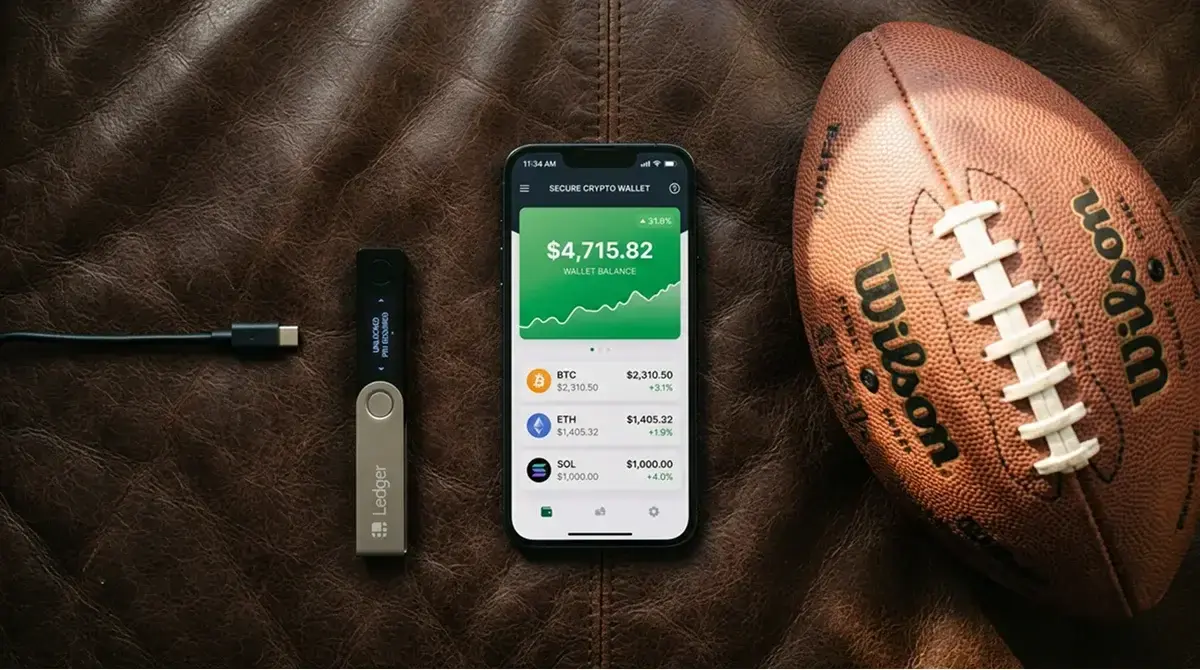
For larger bankrolls, consider keeping the bulk in a hardware wallet, a physical device that stores your private keys offline, completely isolated from internet-connected threats. Move only what you need for the current week to a mobile hot wallet. That way, even if the hot wallet is compromised through malware, a phishing link, or a compromised dApp connection, your exposure is limited to one week’s betting budget rather than your entire crypto holding. This layered approach mirrors how professional traders manage their own funds: cold storage for reserves, hot wallets for active use.
Whatever you choose, test the full cycle before the season starts. Deposit a small amount on your sportsbook, place a minimum bet, and withdraw the result back to your wallet. If any step fails or feels clunky, you want to discover that during the preseason, not in the fourth quarter of a playoff game with money on the line.