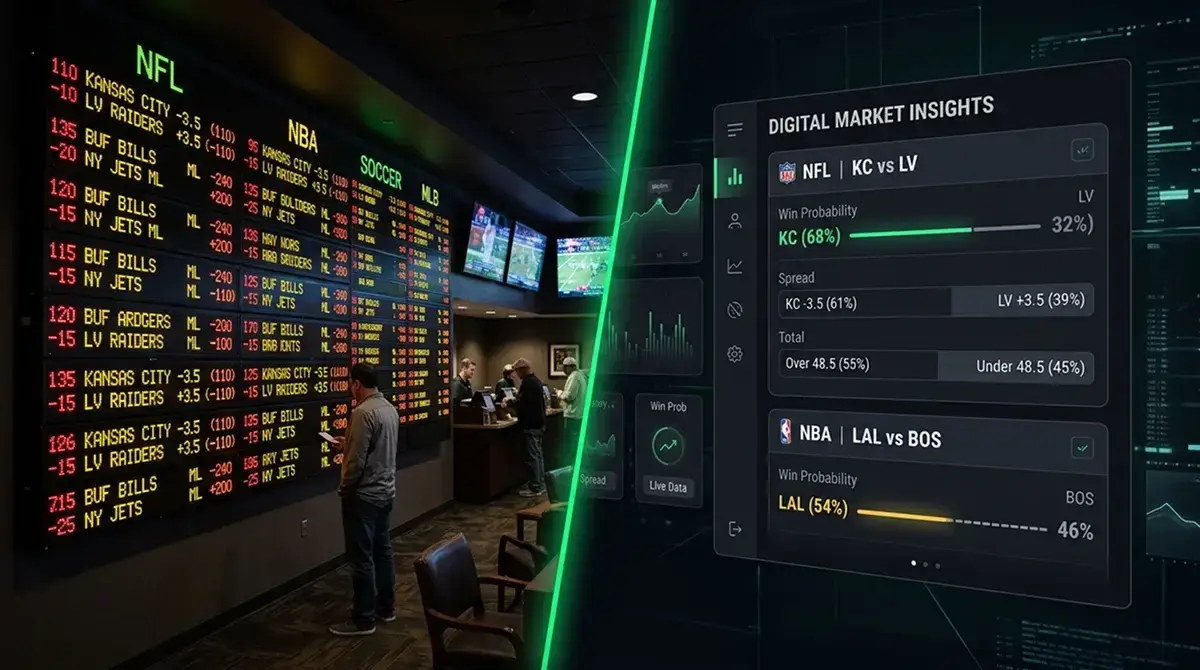


When most people think of crypto sports betting, they picture a familiar sportsbook with a Bitcoin deposit option. That is the CeFi model – centralised finance wrapped in a crypto payment layer. But there is another model growing in the background, one where no company holds your funds, no human sets the odds, and every payout is executed by code. That is DeFi betting, and it changes the rules entirely.
For UK bettors placing NFL wagers, the distinction is not theoretical. It affects who holds your money, how odds are determined, what recourse you have if something goes wrong, and how regulators view your activity. Both models have genuine advantages. Both carry risks that the other does not.
Centralised Crypto Sportsbook Operations and Liquidity Pools
A centralised crypto sportsbook works much like a traditional bookmaker, with cryptocurrency bolted onto the payment layer. You create an account, deposit crypto into the platform’s wallet, and the sportsbook custodies those funds while you bet. The house sets the odds, manages the risk, and processes withdrawals from its own reserves.
The scale of this model is enormous. Stake.com alone processes an estimated £7.9 billion in bets monthly, attracts roughly 127 million visits per month, and generated £3.7 billion in gross gaming revenue in 2024, according to data compiled by Surgence Labs, Forbes, and SimilarWeb. That is a single operator. The CeFi model dominates crypto gambling because it offers something most bettors want: a familiar experience with fast execution.
For crypto NFL betting specifically, CeFi platforms offer deep and well-structured markets that cover every phase of the season from pre-season futures through to Super Bowl props. Regular season, playoffs, Super Bowl, player props, same-game parlays, futures: the full range of NFL wager types is available, often with more prop diversity than UK-licensed bookmakers provide. The odds-setting is handled by experienced trading teams, lines are updated in real time, and live betting operates with minimal latency.
The trade-off is trust. When you deposit Bitcoin on a CeFi sportsbook, you are handing custody of your funds to a company. If that company is hacked, goes insolvent, or decides to freeze your account, your crypto is at their mercy. Licensing from jurisdictions like Curaçao or Malta provides some accountability, but enforcement across borders is slow and uncertain. The history of crypto is littered with centralised platforms that disappeared overnight.
Decentralised Betting Protocols for NFL Markets
DeFi betting protocols take an entirely and fundamentally different approach. There is no single company holding your funds. Instead, smart contracts – self-executing code deployed on a blockchain, typically Ethereum or one of its Layer-2 networks – manage the entire process. You connect your wallet, place a bet, and the smart contract holds your stake in escrow until the outcome is determined. If you win, the payout is entirely automatic.
The odds in a DeFi system are not set by a trading team. They emerge from a liquidity pool – a shared pot of funds deposited by other users who effectively act as the house. When you bet on the Kansas City Chiefs to cover the spread, you are betting against that pool, not against a bookmaker. The odds adjust dynamically based on the balance of money on each side, similar to how a parimutuel system works but with blockchain transparency.
The appeal is philosophical and practical. Philosophically, DeFi betting eliminates the need to trust a centralised entity with your money. Practically, it means your funds remain in your wallet (or in a smart contract you can verify) until the bet settles. There is no withdrawal request, no KYC delay, no risk of an operator freezing your account. Every transaction is recorded on-chain, giving you a permanent, verifiable audit trail of your betting activity.
The limitations are equally real. NFL market depth on DeFi protocols is thin compared to CeFi. Liquidity pools for American football are smaller than those for the English Premier League or major basketball leagues, which means larger bets can move the odds significantly, and exotic markets like player props or same-game parlays are rare or nonexistent. Oracle dependency (the reliance on external data feeds to report game results to the smart contract) introduces a different kind of trust requirement. If the oracle reports a wrong score, the smart contract pays out incorrectly, and reversing it is difficult or impossible.
Custody, Speed and UX: The Trade-Offs for UK Bettors
Choosing between DeFi and CeFi for NFL betting comes down to what you are willing to trade away.
Custody is the clearest divide. On a CeFi platform, the sportsbook holds your funds from the moment you deposit until you withdraw. On a DeFi protocol, your funds remain in smart contracts you can inspect on the blockchain. For bettors who have been burned by exchange collapses or frozen accounts, self-custody is non-negotiable. For those who prioritise convenience, handing custody to a reputable CeFi platform is a price they willingly pay.
Speed favours CeFi – for now. Placing a live NFL bet on a centralised sportsbook takes seconds. Placing the same bet on a DeFi protocol involves a blockchain transaction, which means gas fees and confirmation times. On Ethereum’s mainnet, that could be 15-30 seconds; on a Layer-2, under five seconds. Neither matches the sub-second execution of a CeFi platform, and during a fast-moving NFL game, those seconds matter.
User experience is where CeFi has its widest lead. A well-designed CeFi sportsbook offers a polished interface, customer support, and intuitive navigation across NFL markets. DeFi protocols, by contrast, often present bare-bones interfaces that assume blockchain literacy. Connecting a wallet to the protocol, approving token spending permissions, and understanding transaction confirmations are trivial for crypto natives and bewildering for everyone else. Customer support on DeFi protocols is typically limited to community forums and Discord channels – helpful for technical troubleshooting, considerably less so for resolving a disputed bet settlement or handling a financial complaint or recovering from a user error.
Crypto gambling accounts for roughly 30% of all online wagers globally, according to Platinum Crypto Academy estimates from 2025 – up from 20% in 2022. The overwhelming majority of that volume flows through CeFi platforms. DeFi’s share is growing but remains a fraction. For UK NFL bettors, the practical recommendation depends on your priorities: CeFi for depth, speed, and ease; DeFi for custody, transparency, and ideological alignment with decentralisation. Most bettors will start, and stay, with CeFi.
There is also a hybrid category emerging: platforms that use smart contracts for settlement transparency but maintain a centralised front end for user experience. These protocols attempt to capture the trust advantages of DeFi (verifiable outcomes, transparent odds calculations) while delivering the polished interface and customer support of a CeFi platform. Whether this middle ground proves viable at scale remains unclear, but it represents an acknowledgement by the market that neither pure model fully satisfies the needs of mainstream bettors. For UK punters exploring NFL crypto betting for the first time, understanding where a platform sits on this spectrum is as important as comparing odds or checking licence status.
A small but growing number will find DeFi’s trade-offs worthwhile.