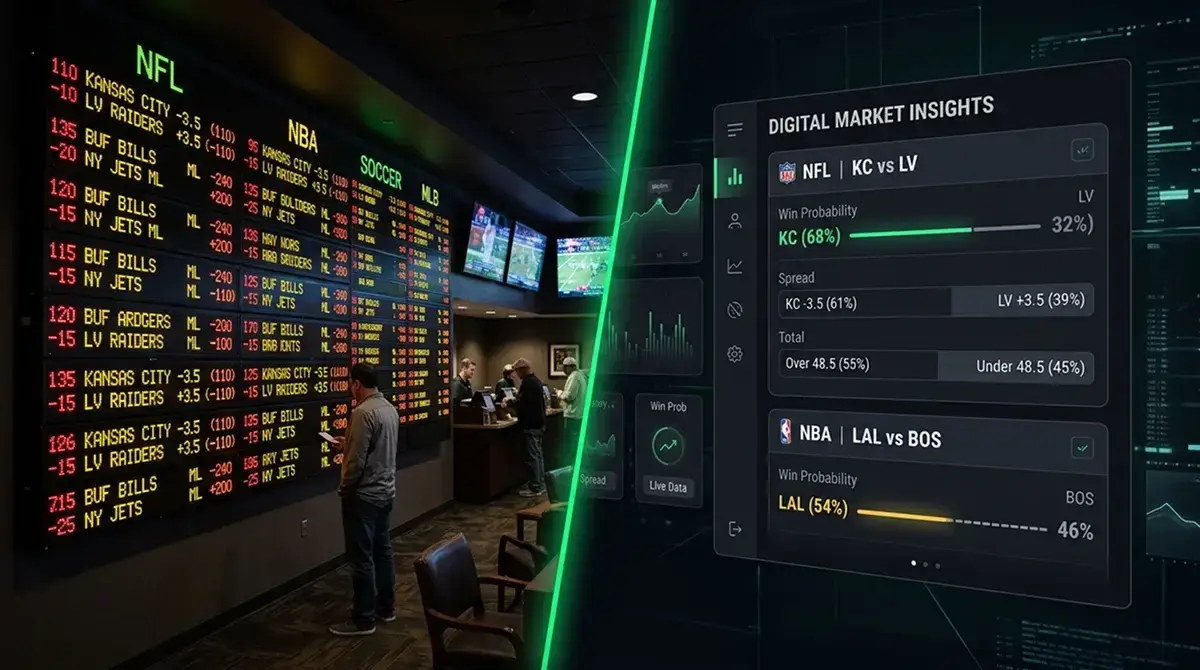

The Kansas City Chiefs are trailing by four with two minutes left in the fourth quarter. The quarterback drops back, scrambles, and suddenly the live moneyline flips. On a traditional UK bookmaker, that line adjustment takes milliseconds. On a Bitcoin sportsbook, you are racing not just against odds compilers but against blockchain confirmation times, network congestion, and the three-to-eight second delay between clicking “place bet” and receiving confirmation. I have lost count of the number of times I have watched a value line disappear while waiting for a BTC transaction to clear.
Live betting – in-play wagering on NFL games as the action unfolds – accounts for 62.35% of online sports betting revenue in 2025, according to CompaniesHistory and Precedence Research, and it is growing at a compound annual rate of 13.62% through 2031. It is the fastest-growing segment of the market, and for UK punters betting on NFL with Bitcoin, it presents both the biggest opportunity and the most distinctive set of challenges.
Because in-play lines change in seconds, having a seamless mobile NFL crypto betting experience is absolutely essential.
In-Play NFL Odds Variations on Bitcoin Betting Platforms
The first time I placed a live NFL bet on a crypto sportsbook, I was struck by how differently the lines behaved compared to what I was used to on UK-regulated platforms. The odds moved in the same direction (a turnover shortens the underdog’s price, a touchdown pushes the favourite further), but the amplitude of the swings was noticeably larger, and the speed of adjustment felt uneven.
There is a structural reason for this. Traditional bookmakers like those licensed in the UK operate with deep liquidity pools and sophisticated algorithmic pricing. They process millions of bets per game, and their models are calibrated by decades of NFL data. Crypto sportsbooks, even the large ones, typically have thinner books. Fewer bets are priced into each market, which means a single large wager can move the line further than it would on a platform processing ten times the volume.
For sharp bettors, this creates genuine opportunity. When a crypto sportsbook is slow to adjust after a significant in-game event (key injury, a momentum shift, a weather change) the line may lag behind the true probability for seconds or even minutes. On a platform where the live betting revenue share mirrors the broader industry figure of 62.35%, those inefficiencies translate into real edge. The challenge is executing on that edge before the line corrects, and that is where Bitcoin’s limitations become relevant.
NFL games move in bursts. A play takes five seconds; the pause between plays can run 25 to 40 seconds. The best live betting windows open during those pauses, when odds compilers are recalculating after a significant play. On a fiat platform, you can fire a bet in that window with near-instant confirmation. On a Bitcoin sportsbook, you are working with a different set of constraints entirely.
Blockchain Latency vs Fiat Speed in Live Markets
Here is a distinction that catches many first-time crypto bettors off guard: the latency that matters in live betting is not the same as Bitcoin’s transaction confirmation time.
When you place a live bet on a crypto sportsbook, you are not sending a blockchain transaction for every individual wager. If you have already deposited BTC and hold a balance on the platform, your bets are processed internally on the sportsbook’s own servers – exactly like a traditional bookmaker. The bet placement speed in that scenario is determined by the platform’s software, not by Bitcoin’s block time.
Where blockchain latency enters the picture is at two other points: deposits and withdrawals. If you need to top up your balance mid-game because you have run through your initial deposit, you are looking at a Bitcoin transaction that requires at least one network confirmation, typically 10 to 60 minutes depending on congestion and the fee you attach. By the time your funds are available, the game situation has changed entirely. This is why experienced live bettors on crypto platforms always pre-load more than they expect to wager. Running out of balance during the fourth quarter of a close NFL game is the crypto-specific equivalent of forgetting to charge your phone.
Some platforms have addressed this by offering near-instant internal crediting for deposits above a certain threshold, absorbing the confirmation risk themselves. Others support Lightning Network deposits, which confirm in seconds rather than minutes. But Lightning adoption among gambling platforms remains inconsistent, and the implementation varies in reliability. I have seen Lightning deposits credited in under two seconds and others that hung for 20 minutes before resolving.
The bet confirmation itself introduces another layer. On high-traffic platforms during marquee NFL games – Sunday afternoon slates, playoff weekends, the Super Bowl – server load can delay bet acceptance by several seconds. This is not unique to crypto sportsbooks; traditional platforms experience the same congestion. But crypto platforms, which generally operate with leaner infrastructure, tend to feel it more acutely.
Never miss a profitable live line by keeping our trusted NFL crypto sportsbook directory bookmarked on your device.
Timing Your Live Bets: UK Time-Zone Considerations
Living in the UK and betting live on the NFL means accepting a time-zone reality that most American bettors never think about. The early Sunday window – 1:00 PM Eastern – kicks off at 6:00 PM in London. The late afternoon slate starts at 9:25 PM UK time. Sunday Night Football begins at 1:20 AM on Monday morning. And Monday Night Football, naturally, runs from 1:15 AM to roughly 4:00 AM on Tuesday.
Over 6 million people in the UK watched NFL London games on television or online during the 2025 season, according to London Loves Business and Front Office Sports, and overall UK NFL TV ratings have doubled over the past decade. That growing audience translates into a growing population of potential live bettors – people who are watching games in real time and want to act on what they see.
The time-zone gap creates both disadvantages and advantages for UK-based live bettors. The disadvantage is obvious: late-night fatigue affects decision-making. I have made some of my worst live betting decisions at 2:00 AM on a Monday when I should have been asleep. Discipline erodes when you are tired, and the temptation to chase losses intensifies when you know there are no more games until next week.
The advantage is less obvious but real. UK bettors watching the late games are operating during hours when American recreational bettors have largely finished their wagering for the day. Line movement during the late window can be sharper and more informed, because the casual money has already been placed. On crypto sportsbooks with thinner books, this can mean less noise in the line movement and clearer signals about where smart money is landing.
There is also a practical consideration around platform performance. Crypto sportsbooks tend to experience peak server load during the early and late Sunday windows, when American bettors are most active. By the time Monday Night Football kicks off, which is Tuesday morning in London – traffic has thinned considerably. Bet placement is faster, live markets are more responsive, and the experience generally runs more smoothly. It is cold comfort at 3:00 AM, but it is a genuine edge if you have the stamina for it.
The most disciplined approach I have found is to treat NFL live betting like shift work. Set a budget for the evening, pre-load your crypto sportsbook balance before the first snap, and have a firm cut-off time regardless of what the scoreboard says. The range of NFL bet types available on crypto platforms is wide enough that you can find value without staying up for every snap of every game. Pick your spots, execute quickly, and know when to walk away – preferably before the fatigue starts making decisions for you.